We tell you what Demand Driven MRP (DDMRP) is, how this methodology based on real demand works
If you have a company and at some point you have to produce exactly what your customers ask for (no more and no less), it's easy to say, but in practice, any small variation in demand can disrupt everything that is already projected. It could cause excess inventory, delays, or even worse, a shortage of raw materials. That's where Demand Driven MRP, or DDMRP, comes into action, a methodology that seeks to plan, replenish, and produce according to actual demand, not just based on forecasts or assumptions.
A step beyond traditional MRP
MRP (Material Requirements Planning) was a classic for many years and was very helpful for planning materials within companies. It calculated what, how much, and when to order each component to manufacture a product. The problem is that this system was based on forecasts, and we all know that predicting the future doesn't always go well, especially in complex supply chains.
The DDMRP methodology emerges as an evolution of traditional MRP, and combines the best of several worlds:
- The planning logic of MRP.
- The agility of Lean Manufacturing.
- And the dynamic vision of the modern supply chain.
DDMRP focuses on responding quickly to actual changes in demand, not guessing it.
How does DDMRP work?
The idea is simple but very functional and powerful because instead of 'pushing' production based on what we think will be sold (as MRP does), DDMRP 'pulls' the flow of materials from actual customer needs. To achieve this, it uses three important concepts:
- Position: locate strategic points in the bill of materials (BOM) and in the supply chain where it makes sense to maintain safety stock.
- Protect: establish inventory zones (like traffic lights) that indicate when replenishment is needed.
- Pull:replenish only when actual consumption justifies it.
This way, the system remains alive, adapting to fluctuations in demand and avoiding both overproduction and shortages. It's a quick solution to real problems.
A smarter inventory
With DDMRP, companies stop having warehouses full of products that perhaps no one will buy and only maintain the necessary stock, managed visually through color zones (green, yellow, and red), which show when to replenish and when to slow down.
For example:
- Green zone: healthy inventory, no need to replenish yet.
- Yellow zone: approaching the order point.
- Red zone: warning! need to restock.
This allows planners and production teams to act quickly, without relying on complicated forecasts or eternal spreadsheets.
Real benefits of DDMRP
Implementing Demand Driven MRP brings with it a series of practical benefits that are noticeable from the first few months:
- Lower inventories without affecting the level of service.
- Faster and more reliable deliveries.
- Greater visibility throughout the entire supply chain.
- Agile response to fluctuations or unforeseen events in demand.
- Optimization of productivity and reduction of storage costs.
Companies manufacture what is needed, when it is needed, and with just the right resources.
What role does software play?
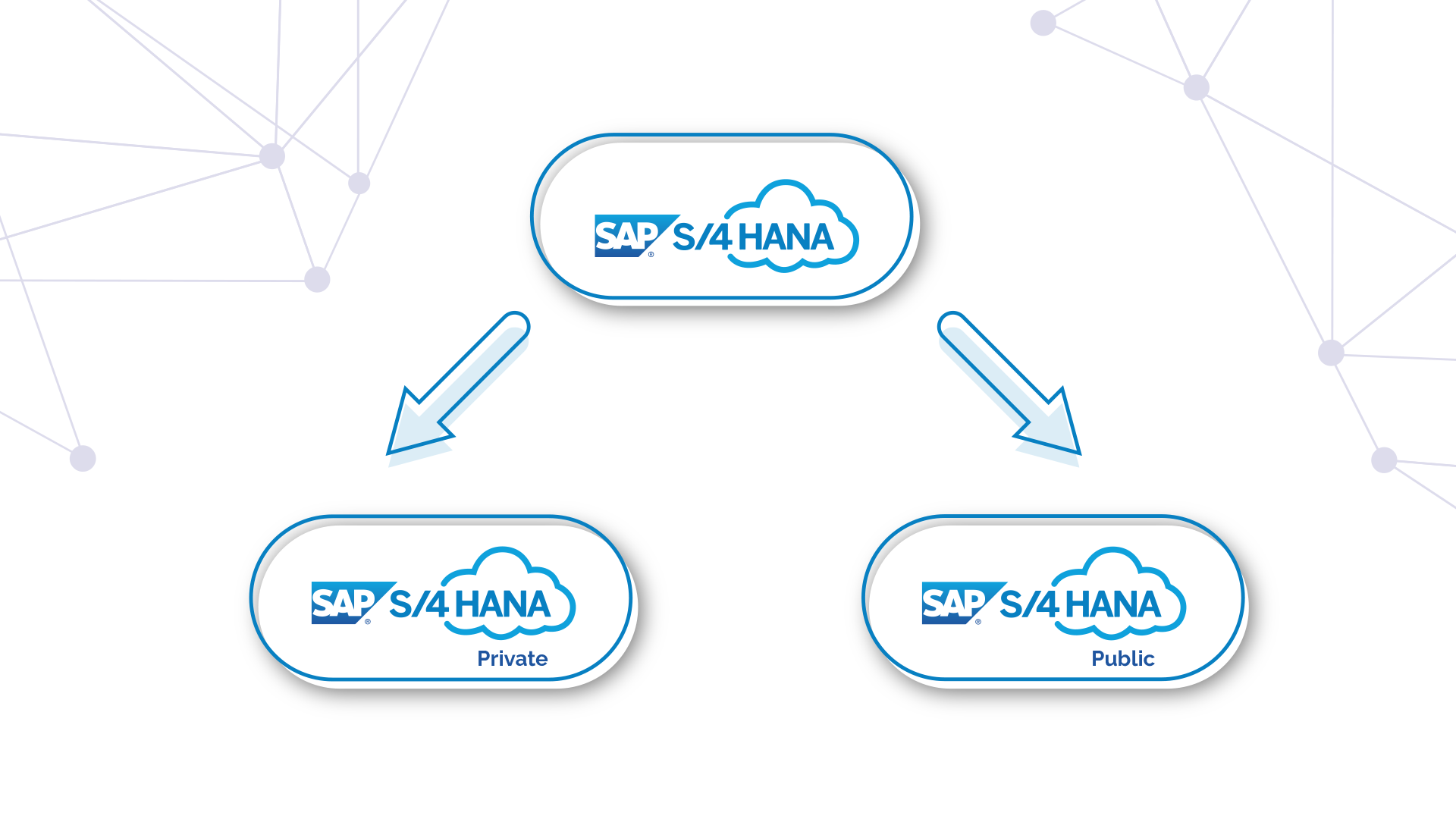
Today there are technological solutions that integrate the DDMRP methodology directly within ERP or supply chain planning systems. For example, SAP S/4HANA Cloud already incorporates Demand Driven Material Requirements Planning modules, which allows you to visualize inventories, adjust parameters, and coordinate better with suppliers and customers.
These systems not only automate replenishment, but also incorporate artificial intelligence, predictive analytics, and real-time visualization to improve decision-making.
DDMRP vs MRP
Let's look at the most notable differences between both solutions.
|
Aspect |
Traditional MRP |
DDMRP |
|
Base |
Forecasts (push) |
Actual demand (pull) |
|
Inventory |
Relies on static calculations |
Adjusts dynamically |
|
Ideal environment |
Stable and predictable |
Volatile or uncertain |
|
Objective |
Meet production plans |
Respond to actual needs |
|
Visibility |
Limited |
Total, visual, and real-time |
Implementation and adaptation
Adopting DDMRP is not just about installing software. It's a management strategy and organizational culture. Organizations that implement it must train their teams, clearly define their inventory levels, adjust their procurement processes, and maintain constant communication with their suppliers and customers.
Many companies start by applying it to some products or in specific areas of production or distribution, and then expand it based on the results.
Integrate DDMRP into SAP with the support of Xamai
If your company already works with SAP or is about to implement it, the next step is to take advantage of the capabilities of Demand Driven MRP to improve material planning and replenishment.
At Xamai, we accompany you throughout the implementation, configuration, and customization process of your system, so you can:
- Have intelligent inventories, without excesses or shortages.
- Improve productivity and customer delivery.
- Visualize your entire supply chain, clearly and in real time.
Frequently Asked Questions
1. Does DDMRP only serve for manufacturing companies?
Not necessarily. DDMRP is also applied in distribution, retail, or service companies that manage inventories and procurement processes. In general, any organization that needs to replenish materials or products according to customer demand can benefit from it.
2. Can DDMRP be applied if my company still uses spreadsheets?
Yes, although it is not ideal. You can start by understanding the principles of the methodology (position, protect, and pull) and applying them manually. To take full advantage of its potential, it is best to migrate to an ERP software that integrates DDMRP, such as SAP S/4HANA Cloud.
3. What happens if the demand for my products is very unstable?
That's precisely where Demand Driven MRP shines because it is designed to absorb fluctuations in demand and protect material flows through dynamic inventories. Instead of generating chaos, the system automatically adjusts according to actual consumption.
4. Does DDMRP help improve relationships with suppliers?
Yes, a lot. By using clearer and more visual replenishment signals, suppliers know exactly when materials or products will be needed. This reduces urgencies, improves delivery scheduling, and strengthens collaboration within the supply chain.
5. What role do planners play in a DDMRP environment?
Far from disappearing, planners gain a more strategic role. They stop chasing orders or making manual corrections, and focus on analyzing trends, adjusting parameters, and improving the system's response. DDMRP automates tasks, but key decisions still depend on human expertise.
6. Can I use DDMRP if I have a global supply chain?
Yes, and in fact it's a great advantage. DDMRP allows decoupling complex supply networks to prevent delays or fluctuations in one point from affecting the entire operation. This improves the stability and overall visibility of the company.
7. What mistakes do companies commonly make when implementing DDMRP?
One of the most common is trying to apply it without understanding its fundamentals or without training the staff. It is also frequent to use static parameters instead of updating them with real data.
That's why it's recommended to do it with the help of experts and with a gradual strategy, not all at once.
8. Can DDMRP be combined with artificial intelligence or advanced analytics?
Yes, and it's a very strong trend. Modern systems like SAP S/4HANA Cloud with Demand Driven Replenishment already integrate AI and predictive analytics to automatically adjust inventory levels, anticipate demand changes, and optimize planning without manual intervention.
9. What kind of training does my team need?
Ideally, planning, purchasing, and production teams should know the basic concepts of DDMRP: inventory zones, buffers, material flows, and replenishment signals.
There are courses endorsed by the Demand Driven Institute, in addition to customized training offered by partners when implementing SAP with integrated DDMRP.
Ready to talk to SAP specialists?
Tell us what your company needs and we'll help you find the best path.
Request information




 English
  Español de México
  Español